Feature article
What happened?
The AI-music argument moved onto a United Nations stage, and the seating chart told the story before anyone spoke.
At the AI for Good Global Summit in Geneva on July 9, John Legend sat with leaders from Universal Music Group, Udio, Stability AI, Splice, and NVIDIA. These were not six versions of the same viewpoint. They represented artists, a major label, generative-music builders, creator-tool companies, and the computing layer underneath them.
The session landed as news on July 13 because the participants now share more than a debate. Universal has struck AI partnerships with several companies represented onstage. It also settled its copyright case against Udio and is working with the company on a licensed music platform, while its case against Suno continues. The fight is turning into product design, licensing terms, and revenue plumbing.
The hook
The most useful line was not about whether AI is good or bad. It was about who gets to keep making music for a living.
Music Business Worldwide reported that Legend called for policy that protects music as a viable career. Splice CEO Kakul Srivastava described tools built around human sounds where the original artist is paid when a sample shapes an AI-assisted result. NVIDIA's Richard Kerris framed AI as an assistant rather than a replacement, but tied the opportunity to artist control and rights.
Those details matter because "artist-first" is easy to say and difficult to encode. The real test is mechanical: Was the work licensed? Can the creator opt in? Is attribution preserved? Does money reach the people whose labor made the system useful? Can a musician challenge a mistake?
ABBA co-founder Bjorn Ulvaeus sharpened the point elsewhere at the summit. According to the same report, he argued that creators deserve a place at the table and a share of the value their work helps produce. That is the harvest in this song. AI companies may build the machinery, but the field did not begin empty.
Why this became a song
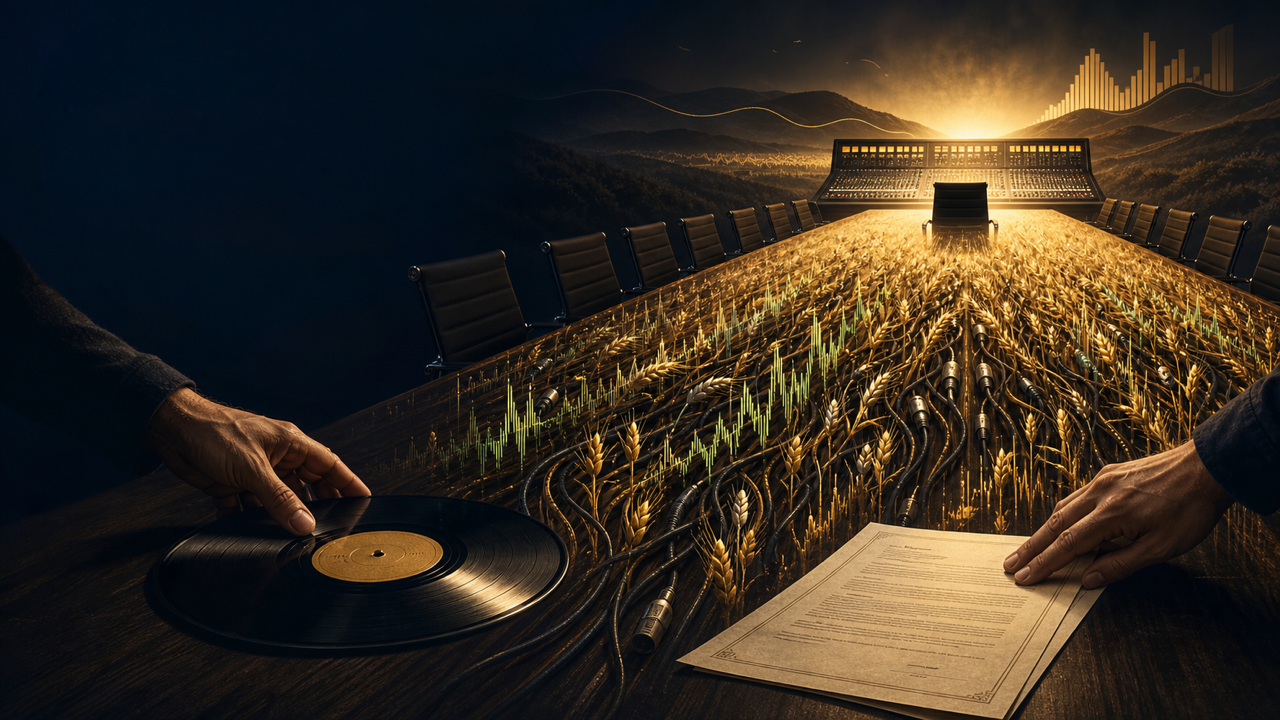
The story has a built-in country metaphor: fields, labor, ownership, and the person who arrives after the work is done with a new machine and a contract.
"A Share of the Harvest" is not an anti-tool song. It is a pro-receipt song. The chorus draws a simple line: if human work trained the ear, seeded the catalog, shaped the sample, or gave the product its cultural value, the people behind that work should not be thanked with a panel invitation and sent home empty-handed.
The verses keep the contradiction visible. Former courtroom opponents can become business partners. A label can defend creators and still negotiate for its own leverage. An AI company can promise control while the exact controls remain unfinished. None of that makes collaboration fake. It makes the contract more important than the slogan.
What operators should do now
If you build with creative AI, treat provenance and compensation as product requirements, not public-relations copy.
Start by recording which models and source materials touch the output. Preserve the human contribution instead of flattening the whole process into "AI-generated." Choose tools that explain their rights model. Keep enough of a trail to answer a creator who asks where a sound, image, voice, or phrase came from.
The ITU's summit advisory confirms how central creators and media leaders have become to the AI-governance conversation. The next stage is less glamorous and more consequential: turning consent, control, attribution, and payment into defaults that survive after the conference lights go down.
Why It Matters
Creative AI is becoming infrastructure for culture. If creator rights remain a promise outside the product instead of a control inside it, adoption can grow while trust collapses. The durable systems will make consent, provenance, attribution, and compensation visible enough to verify.
Sources